
Coupled Natural-Human Systems
Resolving social-environmental system dynamics in subsistence agriculture and developing sustainable water management strategies
Coupled Natural-Human Systems Research
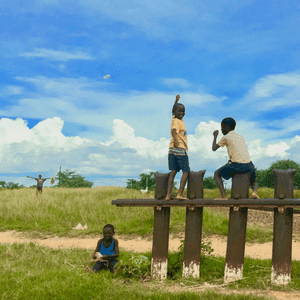
Our CNH research examines the complex interactions between human activities and natural systems, with a focus on agricultural sustainability, food security, and livelihood resilience. We investigate how social and environmental factors interact to shape outcomes for people and ecosystems in dryland regions. This work is conducted through collaborative partnerships with researchers who bring complementary expertise in social science, biophysical systems, and remote sensing.
Research Focus
Dryland regions support over 2 billion people, many of whom depend on rain-fed agriculture for their livelihoods. These systems face increasing pressures from climate change, population growth, and economic transformation.
Our research helps understand how human and natural systems interact and co-evolve, informing strategies for sustainable development and climate adaptation in vulnerable regions.
Methodological Approach
Our research is fundamentally team-based and collaborative. We work with interdisciplinary teams of collaborators who integrate diverse methodological expertise: social science methods (household surveys, participatory approaches, institutional analysis), biophysical measurements (soil moisture, vegetation monitoring, hydrology), and remote sensing data (satellite imagery, geospatial analysis).
This collaborative approach brings together researchers with deep knowledge in sociology, economics, environmental science, and engineering. Field sites in Kenya, Zambia, and Ghana provide opportunities for integrated research across diverse agricultural and livelihood contexts in sub-Saharan Africa.
Key Research Areas
Our CNH research spans multiple interconnected areas of investigation
Agricultural Adaptation
How farmers adapt their practices to climate variability and change, including crop selection, planting dates, water management, and risk mitigation strategies.
Water Resources Management
Sustainable management of water resources in smallholder systems, including irrigation efficiency, groundwater use, and community-based water management institutions.
Food Security
Drivers of food security and nutrition outcomes in dryland regions, including crop productivity, market access, dietary diversity, and seasonal food availability.
Livelihood Sustainability
Resilience and sustainability of rural livelihoods, including income diversification, social networks, and adaptive capacity in the face of environmental and economic shocks.
Land Use Change
Drivers and consequences of land use and land cover change, including agricultural expansion, deforestation, and the impacts on ecosystem services and biodiversity.
Climate Risk Perception
How farmers perceive and respond to climate risks, including cognitive biases, traditional knowledge systems, and the role of information in decision-making.
Research Locations
Our CNH research is conducted across multiple sites in sub-Saharan Africa
Kenya
Smallholder farming systems in semi-arid regions, focusing on maize-based agriculture and pastoralism interactions at the Mpala Research Centre.
Zambia
Climate adaptation and food security in the Southern Province, examining how farmers respond to rainfall variability and seasonal forecasts.
Ghana
Urban food security and peri-urban agriculture, investigating the connections between rural production and urban consumption systems.
Recent CNH Publications
Latest research findings in coupled natural-human systems
Is population growth a threat to agriculture? Perceptions in rural Kenya
S. Lopus, Zack Guido, Kurt B. Waldman, Drew Gower, Andrew Zimmer, Kelly Caylor, Tom Evans (2026) • Population and environment
Perceptions of population growth and its potential threats to water security could prompt sustainability actions such as infrastructural improvements, use of water-saving technologies, and limits on water access. However, little is known about perceptions of population dynamics, including in rural areas of low-income countries. We surveyed around 500 smallholding farmers in a largely rain-fed region of Central Kenya, finding that virtually all respondents (96%) perceive population growth in their area, and the majority (57%) view localized population growth as a threat to their agricultural livelihoods. Although respondents in faster-growing areas were more likely to perceive population growth, localized demographic conditions were not associated with the likelihood of viewing population growth as a threat to agriculture. Respondents with high population threat perceptions commonly expressed concerns about land – not water – shortages, suggesting that population threat perceptions may not prompt water-conscious climate resilience in the way we had hypothesized. This study represents a useful step toward better understanding how population perceptions could shape population-responsive environmental policy in a growing region.
Five Lessons for Closing the Last Mile: How to Make Climate Decision Support Actionable
K. Baylis, E. C. Lentz, Kelly Caylor, M. Gu, C. Gunderson, T. Haigh, M. Hayes, H. Lahr, D. Maxwell, C. Funk (2025) • Earth's Future
Climate shocks are increasing, threatening global agricultural production and food security. But a more extreme climate allows for improved predictions and enables advisory services that allow farmers, ranchers and consumers to respond effectively. To date, there is limited uptake of forecasts. How can we make sure these predictions are valued by and valuable for users of agro‐climatic forecasts? Over the past two years, we held over 40 interviews with food system stakeholders to identify their needs and shortcomings of existing decision support. In this Commentary, we combine these findings and nascent modeling efforts with existing literature to characterize five lessons for improving the uptake and utilization of predictive tools for last mile users in the agrifood system. Given the explosion of machine learning prediction efforts across many applications, we believe our lessons are broadly applicable to forecasting models intended for decision support. Improved accuracy alone does not necessarily lead to improved decision support, and the trust required to motivate action.
Potential impacts of transportation infrastructure improvements to maize and cassava supply chains in Zambia
Junren Wang, M. Konar, Kathy Baylis, Lyndon D. Estes, Protensia Hadunka, S. Xiong, K. Caylor (2023) • Environmental Research: Infrastructure and Sustainability
None
Explore Our Research
Learn more about our other research themes and discover how human systems connect with ecohydrology and environmental sensing.